This is the Har Homa settlement, a suburb of Jerusalem built during the 1990′s. It is the perfect example of an attempt to imitate the complex form of the traditional hill town without employing any of the same processes. As a result the repetition of shapes at the scale of buildings gives away the production process as a type II physical phenomenon and not a complex living environment. Who could truly love it?
To quote James Howard Kunstler, in a region where his words have a much more urgent significance, will this be a place worth defending?


Decoding Sidi Bou Sa'id
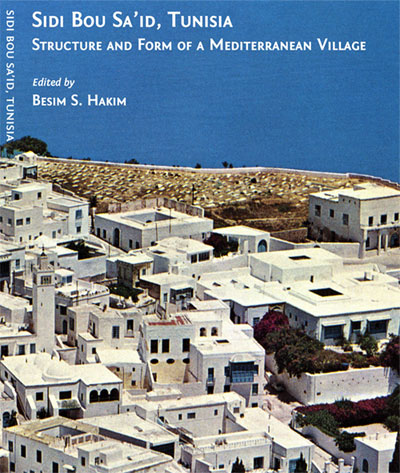
Besim S. Hakim has recently published a new edition of the study of the village of Sidi Bou Sa’id in Tunisia, the project that began his career decrypting the processes underlying the emergent morphology of Mediterranean towns.
In light of the major developments complexity science has made in the decades since, the preface of the new edition puts things in their updated context.
This kind of study is essential if we are to reinvent an urbanism that is truly traditional in nature and complex enough to achieve modern sustainability.
Michael Mehaffy’s review provides more context.
If you are interested in the contrasting principles of traditional urbanism as opposed to traditional architecture in a modern planning system, this book can be your guide.
Sidi Bou Sa’id, Tunisia: Structure and Form of a Mediterranean Village
edited by Besim S. Hakim